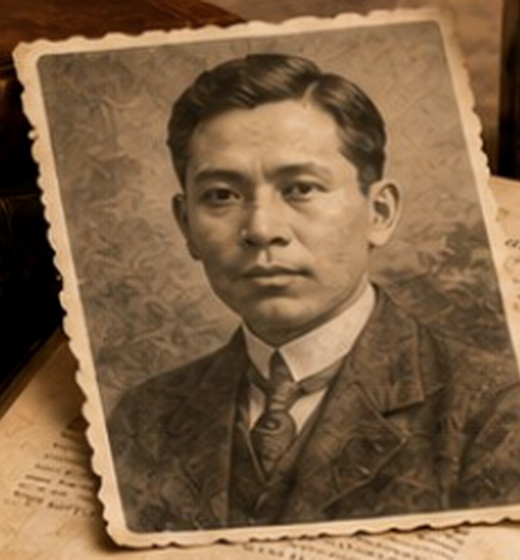
National Artist for Literature

Francisco “Franz” Arcellana

September 6, 1916 – August 1, 2002

Filipino writer, poet, essayist, critic, journalist, and teacher whose fiction helped shape the modern Filipino short story in English.

Author biography

Life, Writing, and Literary Formation

Arcellana’s career moved across classrooms, school papers, creative writing fellowships, literary criticism, and fiction. His work remains a key part of Philippine literary study.

01
Author profile illustration
Francisco “Franz” Arcellana Writer, teacher, and National Artist for Literature

Early Years and First Writing

Francisco “Franz” Arcellana was born on September 6, 1916. From childhood, he already carried the ambition of becoming a writer. His first serious writing experience began during his high school years when he joined The Torres Torch Organization.

At the University of the Philippines Diliman, he continued to write for school papers. These campus publications gave him a space to practice fiction, criticism, and literary observation before his work became widely recognized.

Arcellana later worked across several literary and academic roles. He became known as a writer, poet, essayist, critic, journalist, and teacher. His career connected creative writing with classroom instruction, making his works useful for both literary study and guided interpretation.

His stories helped shape the modern Filipino short story in English. He developed fiction with lyrical language, careful imagery, and emotional restraint, qualities that make his works valuable for close reading and annotation.

02

Creative Writing Fellowships

Arcellana received a Rockefeller Grant and became a fellow in Creative Writing at the University of Iowa and at the Breadloaf Writers’ Conference from 1956 to 1957.

03

Modern Short Story Pioneer

He is considered an important progenitor of the modern Filipino short story in English. He helped develop the short story as a lyrical, prose-poetic form in Filipino literature.

Milestones

Literary Honors and Legacy

Jose Garcia Villa’s Honor Roll

Fourteen of Arcellana’s short stories were included in Jose Garcia Villa’s Honor Roll.

Don Carlos Palanca Memorial Awards

The Flowers of May won second place in the short story category.

Art Criticism Award

He received first award in art criticism from the Art Association of the Philippines.

Patnubay ng Sining at Kalinangan

The City Government of Manila honored him for his contribution to arts and culture.

Gawad Pambansang Alagad ni Balagtas

UMPIL recognized him for English fiction.

National Artist for Literature

President Corazon C. Aquino proclaimed him National Artist of the Philippines in Literature on May 23, 1990.

Legacy note

Works taught across Philippine classrooms

Many of Arcellana’s works are taught in tertiary-level syllabi in the Philippines. His writings were translated into Tagalog, Malaysian, Russian, Italian, and German.

In 2009, his family released Franz, a tribute book with essays from colleagues, friends, students, and family members.

State Funeral Libingan ng mga Bayani

Arcellana died on August 1, 2002. As a National Artist, he received a state funeral and was buried at the Libingan ng mga Bayani.

Selected short stories

Story Archive

Each selected story includes a synopsis and short background notes for classroom preparation.

The Mats

A story often discussed for its quiet emotional force and its portrayal of family remembrance through a set of mats prepared for each family member.

Background notes

Background notes: This story is useful for teaching symbolism, emotional restraint, family-centered narration, and the Filipino value of remembrance. The mat becomes more than an object. It carries memory, identity, and grief.

Open Guide Open Story Board

The Flowers of May

The story presents images of May, flowers, youth, and memory as entry points for literary discussion. It invites readers to observe how setting, mood, and symbolic details shape emotional meaning.

Background notes

Background notes: This selection works well for lessons on imagery, tone, seasonal symbolism, and lyrical prose. Teachers can guide students to connect flowers and May with ideas of innocence, change, memory, and feeling.

Open Guide Open Story Board

The Yellow Shawl

The story uses the image of a yellow shawl as a visual and symbolic focus. It gives students a way to discuss color, gesture, character, and the meanings readers attach to objects in fiction.

Background notes

Background notes: This selection supports discussion of symbolism, visual detail, character interpretation, and mood. The yellow shawl can be read as an object that invites different personal and literary interpretations.

Open Guide Open Story Board